How Top-grossing ranking works
Ranks by money, not units — summed revenue from the daily sales rollup, so a pricier item can out-rank a higher-volume cheaper one.
Top grossing ranks by revenue, not unit count. It reads the daily sales rollup and sums each product’s recorded revenue over the window, so a high-margin, lower-volume item can beat a cheap best-seller. Use it to lead with the products that actually drive your GMV.
1. The collection, unranked
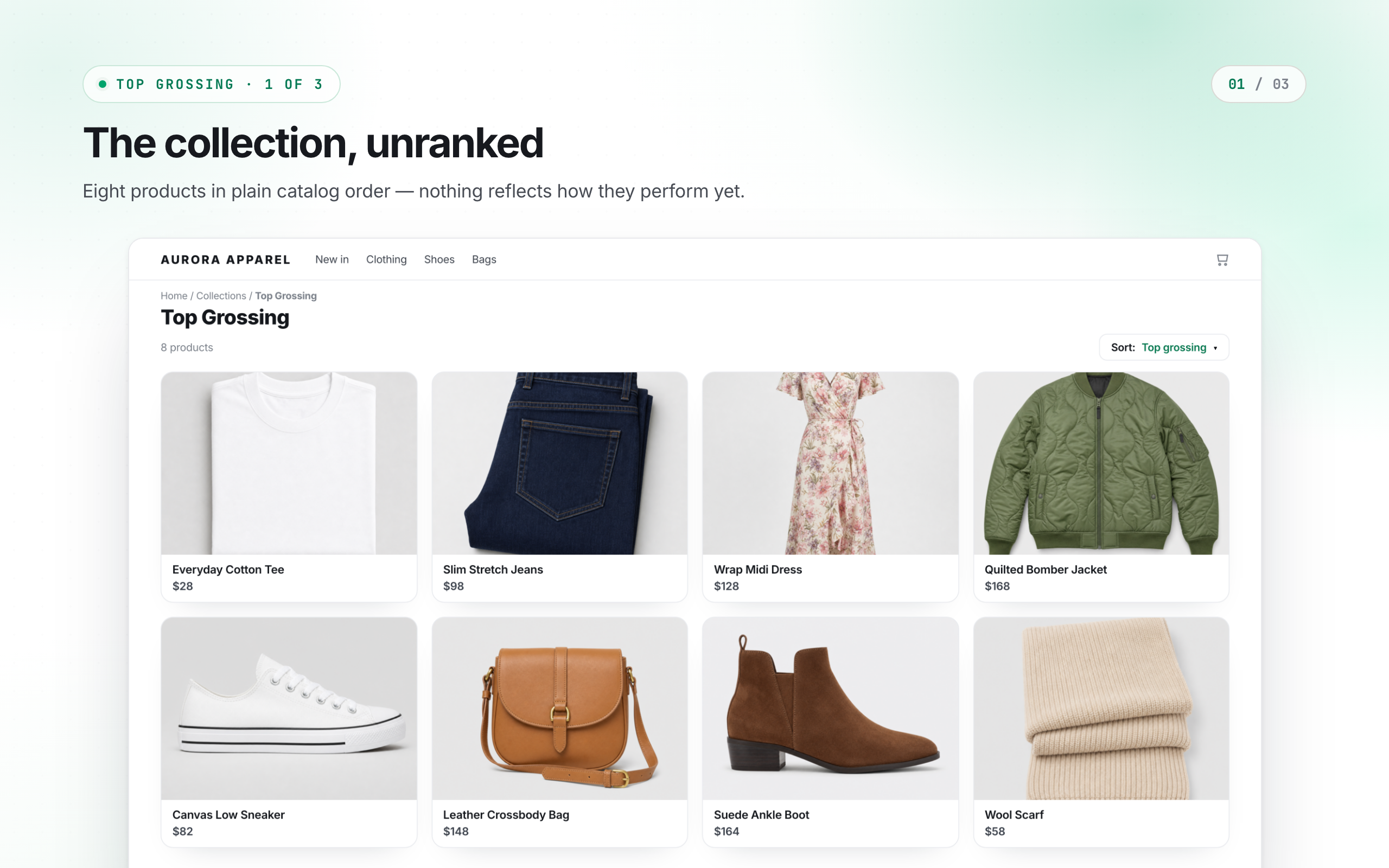
A normal collection page. The order is whatever the catalog lists — the best performers could be buried on the second row where few shoppers scroll.
2. The ranking engine scores it
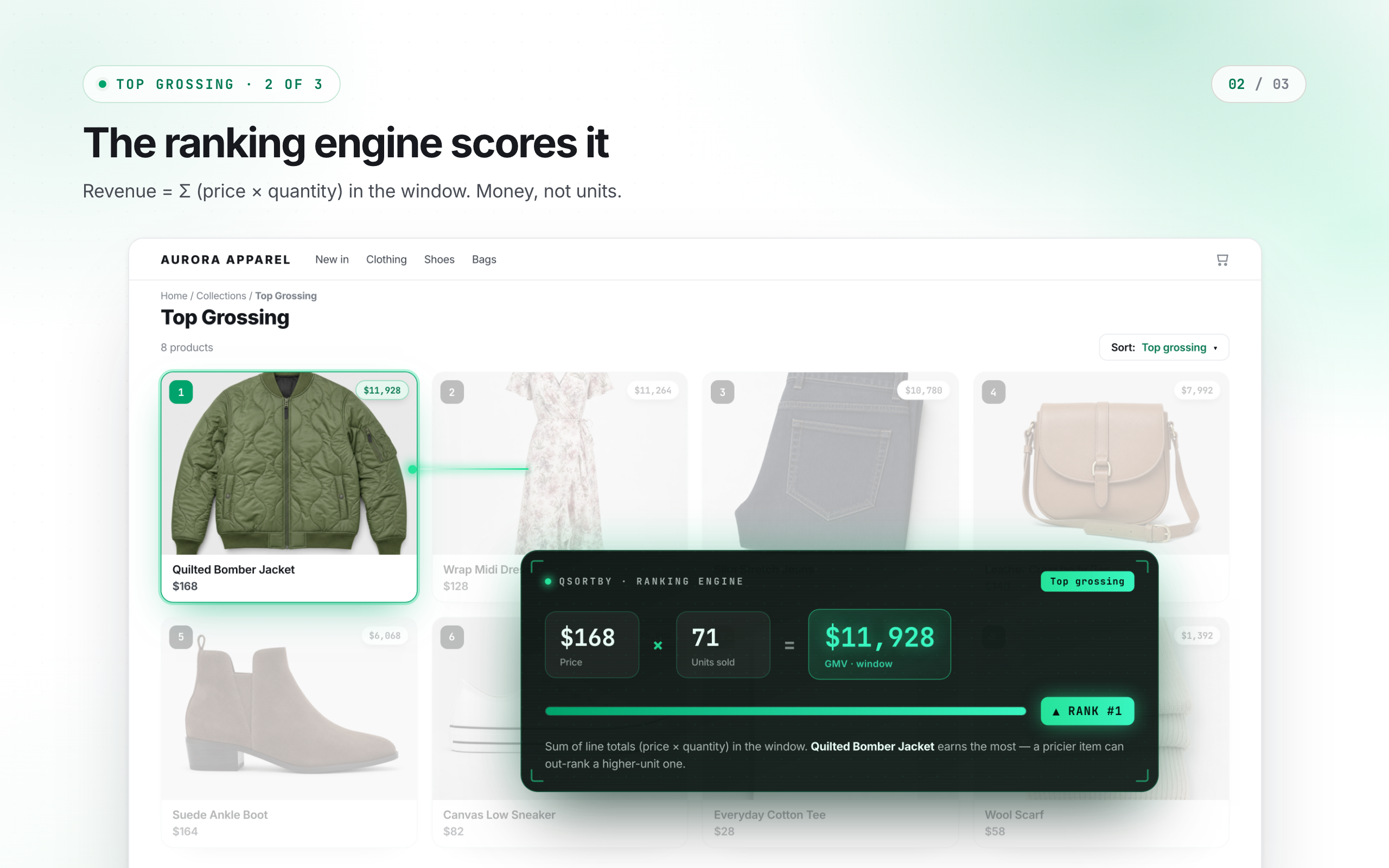
The engine sums each product’s recorded revenue across the window. A $168 jacket selling 71 units out-earns a $28 tee selling 142 — so unit-count leaders don’t always top the revenue ranking. Products with no recorded revenue in the window are dropped. The window snaps to whole days in UTC here, so “last 7 days” means today plus the six days before it, and an hours-based window counts as a single day.
3. The front row gets discovered
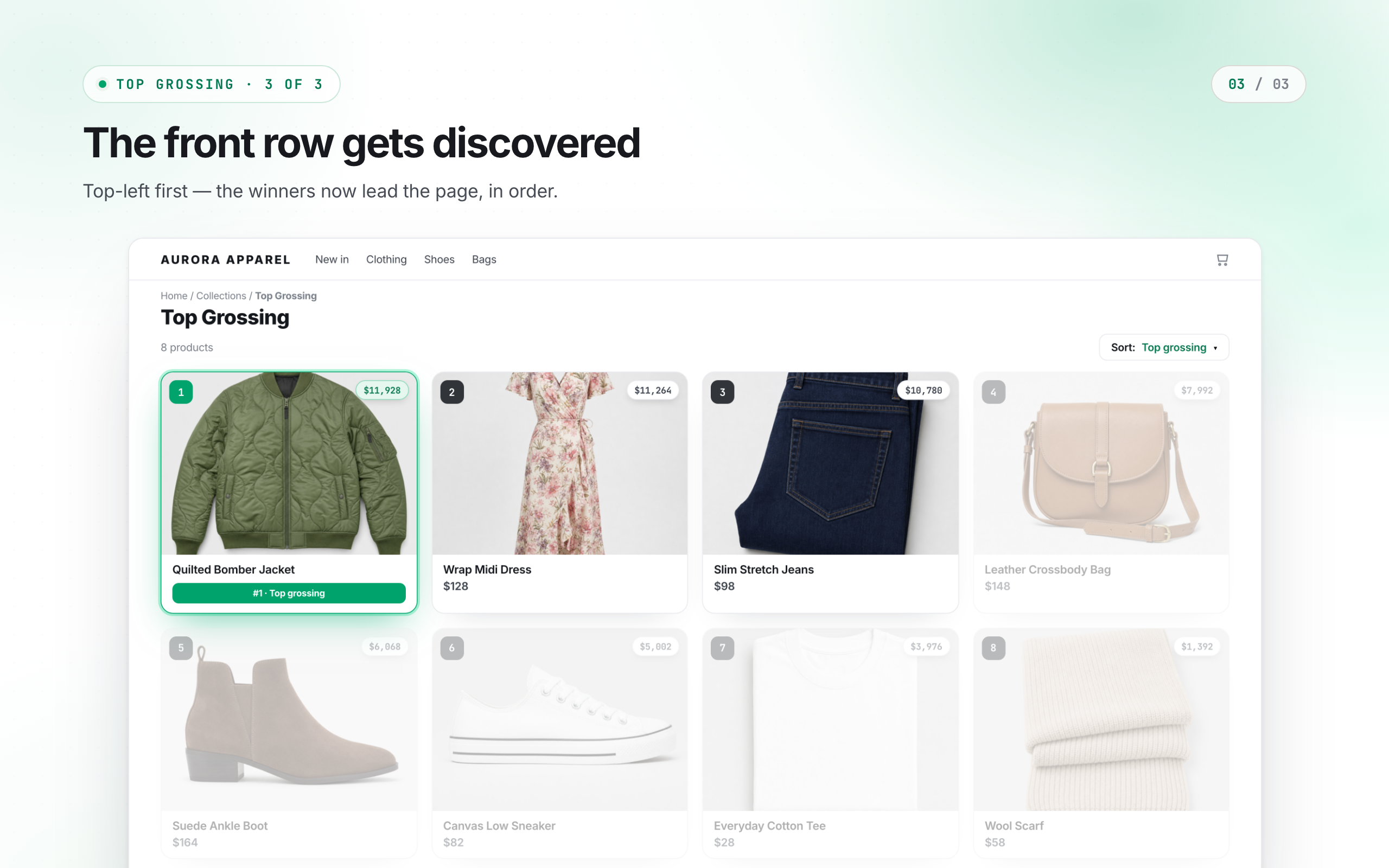
The strongest products now fill the front row — the slots that get the most views and clicks. That’s the payoff: ranking turns your best products into the ones shoppers see first. When fewer products have revenue than your Max products cap allows, the app widens the window to all-time and then falls back to the collection’s current order — filler always sits below every genuinely ranked product.