How segment matching picks each shopper's order
Step by step: how a personalization rule routes each shopper — checked top to bottom, first matching group wins, and that group's scoring recipe is what they see.
Ranking signals decide the order of products; segment matching decides which order each shopper gets. A personalization rule is an ordered list of shopper groups — each with an audience (who qualifies) and a scoring recipe (what they see). Every visitor is checked top to bottom, and the first group they match wins. Here’s how one shopper is routed.
1. A rule is an ordered list of groups
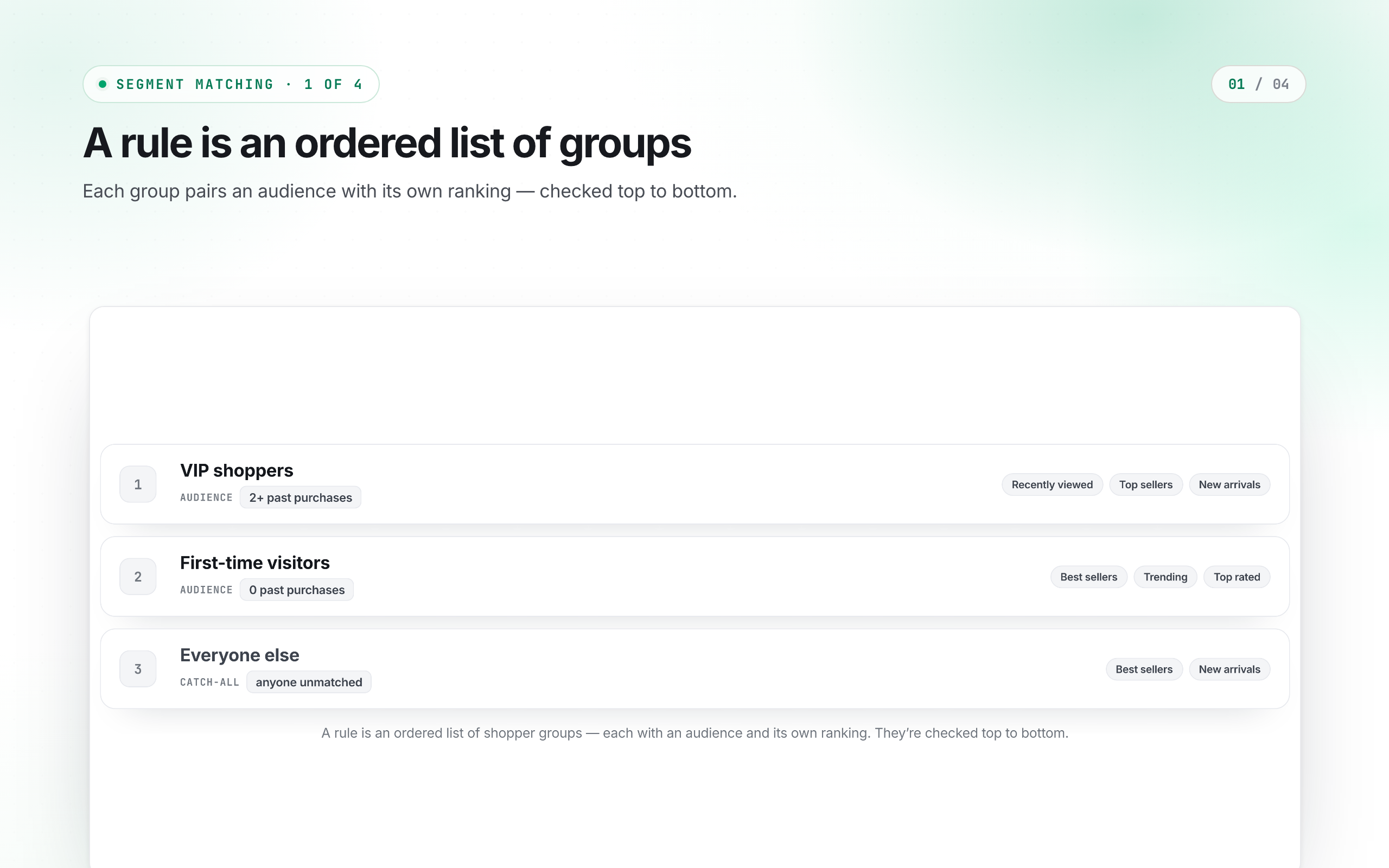
Three groups: VIP shoppers (2+ past purchases), First-time visitors (0 past purchases), and a locked Everyone else catch-all. Order matters — the group nearer the top is checked first. Each group carries its own scoring recipe: a set of signals with weights.
2. A shopper arrives
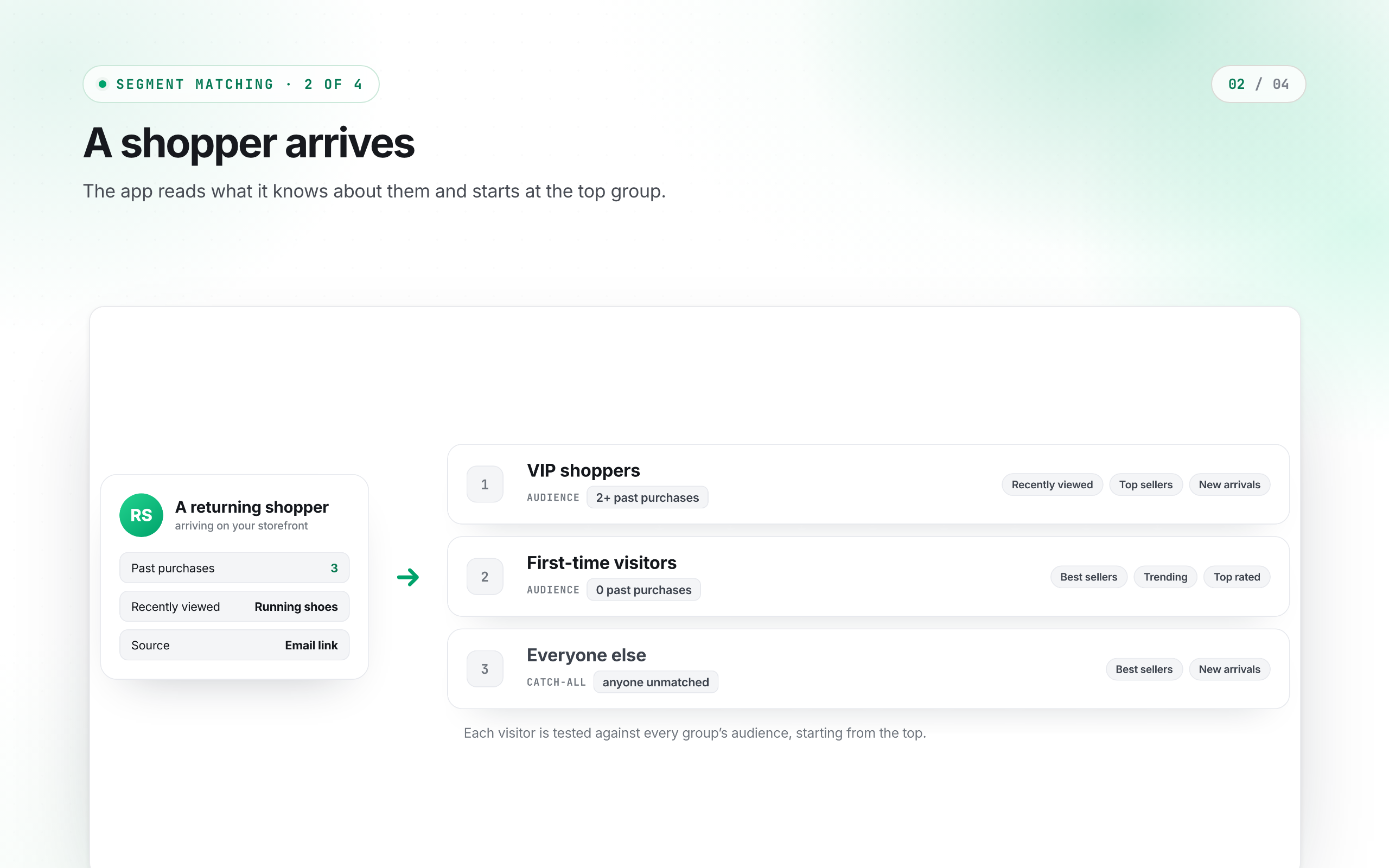
This returning shopper has 3 past purchases, recently viewed running shoes, and came from an email link. Each visitor is tested against every group’s audience, beginning with the first.
An audience reads a small set of numbers about the visitor, not their whole history: purchase count, days since last visit, visit count and cart size. Everything else about them — what they browsed, where they came from — belongs to the scoring recipe, not the audience. A brand-new visitor has no prior visit on record, so a condition on days since last visit never matches for them and they fall through to the next group.
3. First match wins
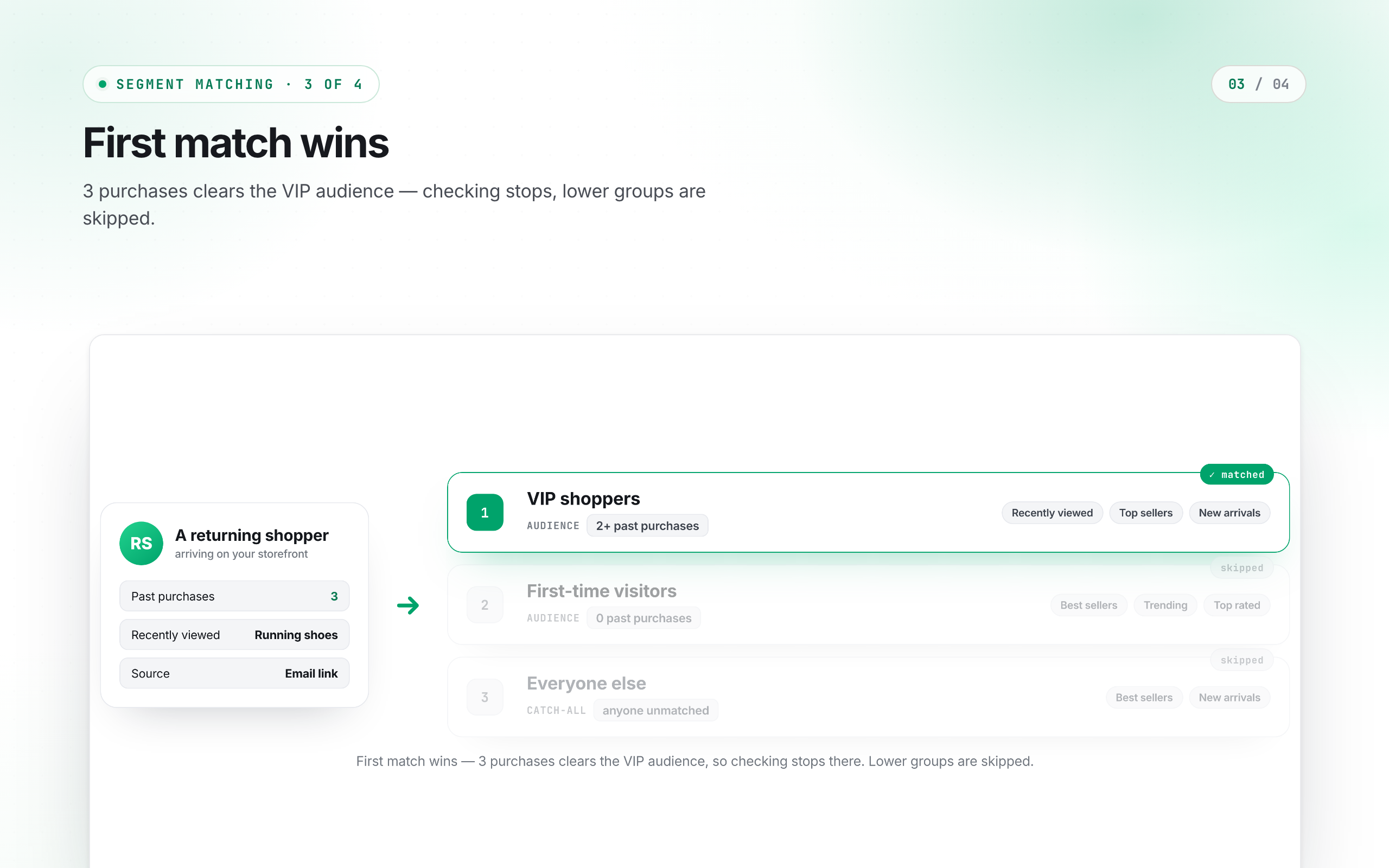
3 past purchases satisfies VIP shoppers (2+), so the shopper is placed in that group and checking stops immediately — the groups below are never evaluated. This is why group order matters: put your most specific audiences near the top.
4. They see that group’s order
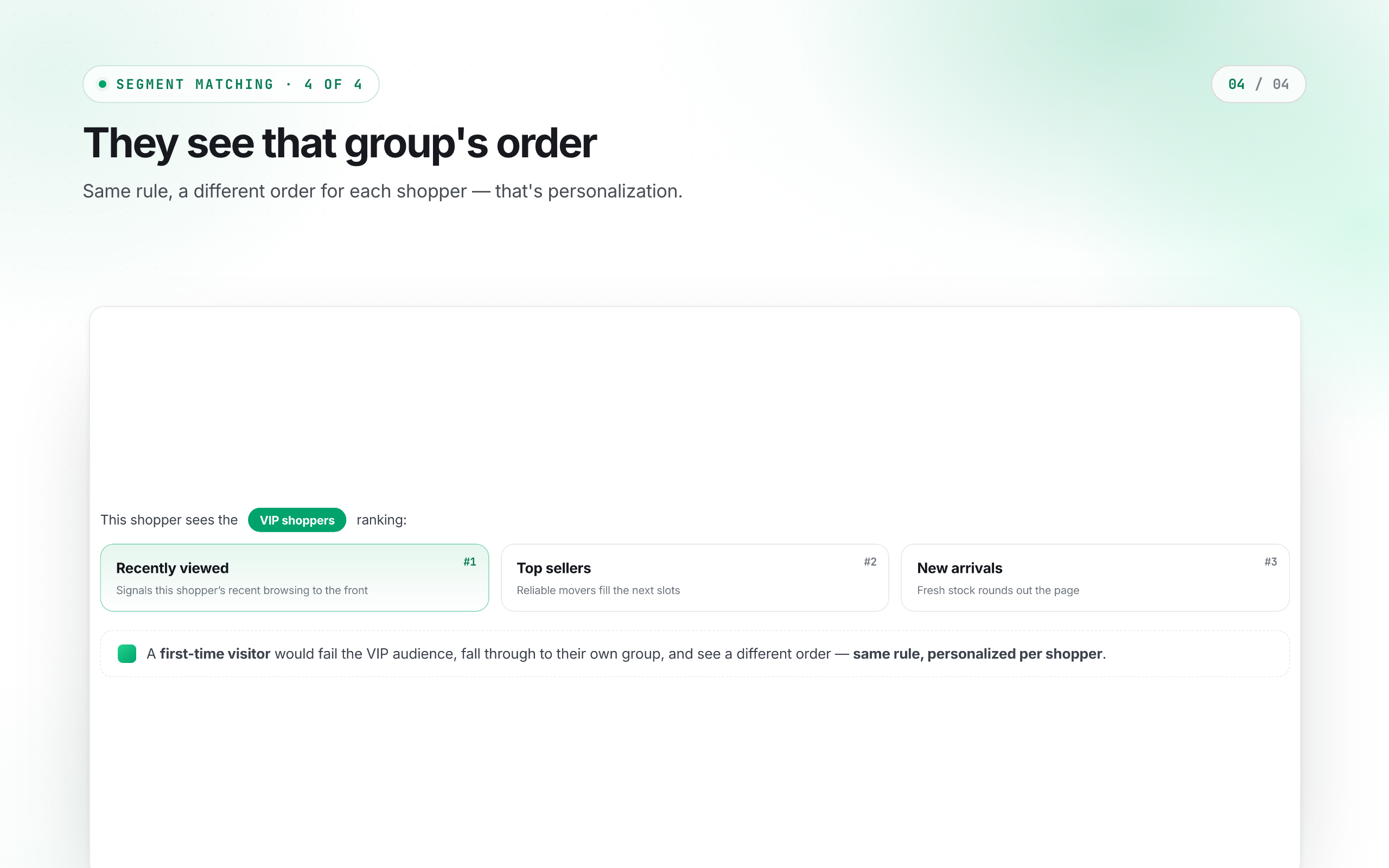
The shopper now sees the VIP order — every product scored on that group’s recipe, with Recently viewed and Repeat purchase weighted heaviest and Top sellers only nudging the result. It’s a weighted blend, not a priority list: a strong enough score on one signal can outweigh a weak one on another. A first-time visitor would fail the VIP audience, fall through to their own group, and be scored on a completely different recipe. One rule, tailored to each shopper.